For clinical trials
Endpoint Development
Advance your clinical program with meaningful digital endpoints.
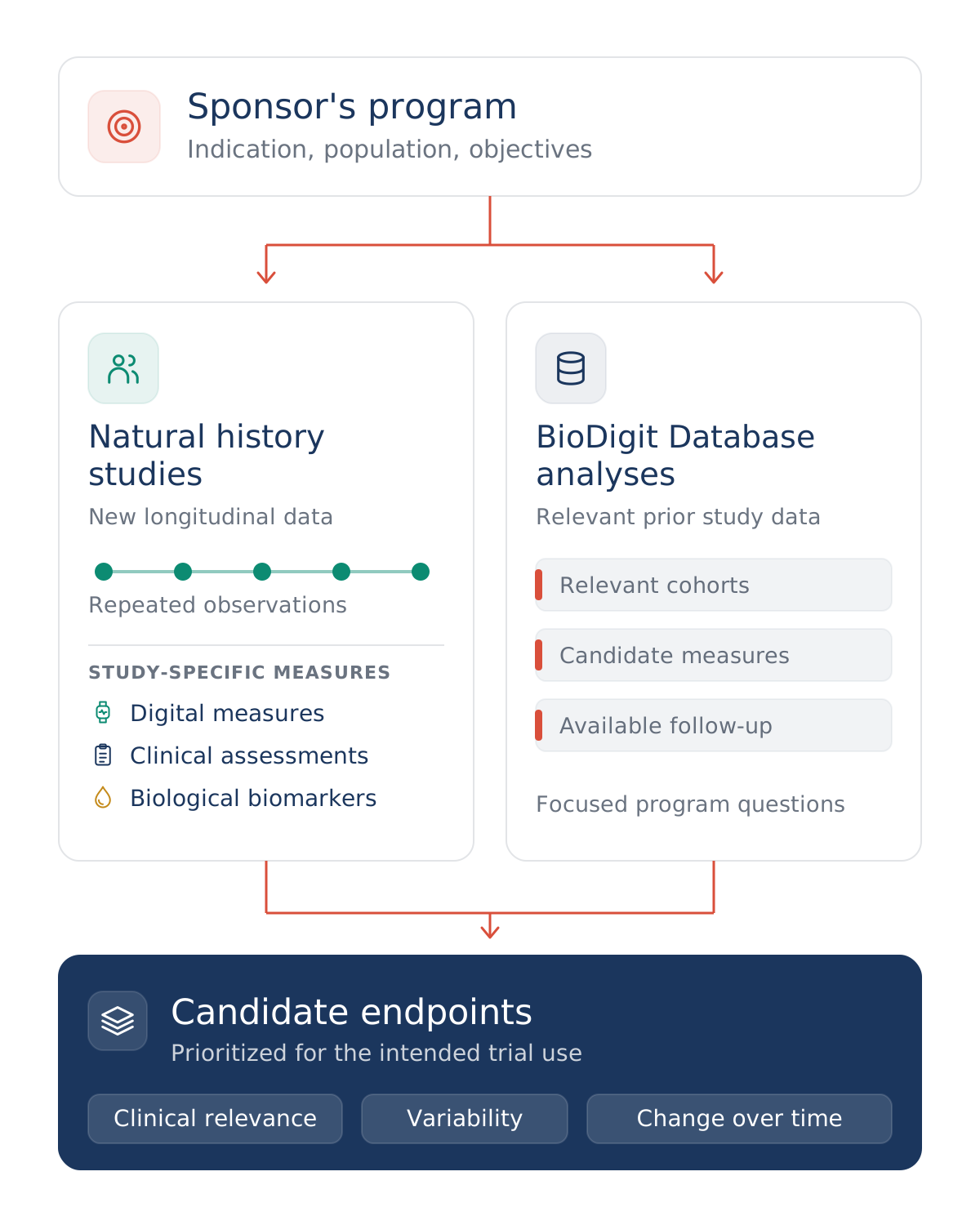
BioSensics partners with pharmaceutical sponsors to develop indication-specific endpoints through natural history studies and targeted analyses of the BioDigit Database. Together, we identify candidate measures, evaluate their clinical relevance, and define the evidence needed for your program. Our studies combine digital measures with clinical assessments and have also included biological biomarkers, such as blood biomarkers.
Advancing candidate endpoints through the FDA ISTAND program
FDA has accepted the Letter of Intent for LEGSys-derived foot drop measures into the FDA ISTAND program. The proposed use is to track outcomes over time in adults with CMT1A using measures collected during the 6-Minute Walk Test. FDA has accepted PAMSys into the FDA ISTAND program as a drug development tool for measuring ambulation in progressive supranuclear palsy (PSP) clinical trials. The Letter of Intent for BioDigit Speech measures in PSP has been accepted for review.
A research partnership built around your program
Work with BioSensics to define the target population, characterize disease course, and prioritize candidate endpoints. Natural history studies and BioDigit Database analyses provide complementary evidence for selecting and developing endpoints for your indication.
What your team receives
Deliverables are agreed with your team and tailored to the study or analysis.
-
Research and analysis plan
A natural history study protocol, a BioDigit Database analysis plan, or both, tailored to your research questions.
-
Study findings
Findings on measurement performance, clinical relationships, and change over time where follow-up data are available.
-
Endpoint recommendations
Prioritized candidate endpoints with a clear rationale, supporting evidence, and study limitations.
-
Endpoint development plan
Proposed endpoint definitions, remaining evidence gaps, and next steps for evaluation in the intended trial population.
From disease understanding to candidate endpoints
Develop a research plan for your indication through natural history studies, targeted BioDigit Database analyses, or a combination of both.
-
Natural history studies
Design and conduct longitudinal studies with sponsors to characterize disease course and explore candidate endpoints. Align the population, assessments, and follow-up schedule with the indication and clinical development objectives.
-
BioDigit Database analyses
Analyze relevant data in the BioDigit Database to explore candidate endpoints for a sponsor's program. Use findings to address focused questions, assess evidence gaps, or inform a new natural history study.
-
Digital measures and biological biomarkers
Study selected biological biomarkers, including blood biomarkers, alongside digital measures and clinical assessments. Explore how these complementary measures relate to disease severity, function, and progression.
-
Candidate endpoint evaluation
Evaluate clinical relevance, measurement variability, and change over time. Prioritize candidates for the sponsor's intended trial use and identify the evidence still needed to support that use.
Endpoint development in practice
Examples of how natural history and cohort research can inform trial endpoints, regulatory submissions, and assessment deployment.
-
Sponsor program
From natural history study to Phase 2 endpoint in MSA
PAMSys measured physical activity and posture in bioMUSE, Alterity Therapeutics' natural history study in multiple system atrophy. The measures were subsequently used as a secondary endpoint in the ATH434 Phase 2 trial.
- bioMUSE natural history study
- Physical activity and posture measures
- ATH434 Phase 2 secondary endpoint
-
Regulatory pathway
From cohort studies to FDA ISTAND acceptance in CMT
Gait, balance, foot drop, and at-home activity measures were developed in cohort studies of adults with CMT in collaboration with the Hereditary Neuropathy Foundation, and defined as wearable foot drop metrics for adults with CMT1A. FDA accepted the Letter of Intent into the FDA ISTAND program in August 2026.
- Cohort studies with HNF
- Foot drop metrics defined
- Acceptance into the FDA ISTAND program
-
Platform and trial deployment
From natural history studies to trial deployment in PSP
Twelve-month natural history studies characterized wearable ambulation and digital speech measures in PSP. FDA has accepted PAMSys into the FDA ISTAND program as a drug development tool for measuring ambulation in PSP clinical trials. The Letter of Intent for BioDigit Speech measures in PSP has been accepted for review. The measures are being integrated into the PSP Trial Platform and have been deployed in a pharmaceutical sponsor's Phase 1 study.
- Natural history studies
- PAMSys accepted into the FDA ISTAND program
- PSP Trial Platform and a sponsor's Phase 1 study
A broader view of disease progression
Natural history studies can examine biological biomarkers alongside clinical assessments and digital measures of function. Select the combination that addresses your indication, disease stage, and research questions.
-
Mobility and daily activity
Walking, posture, transitions, and activity patterns measured in the clinic or during daily life.
-
Upper limb function
Performance on structured motor tasks and patterns of arm use during daily life.
-
Speech and cognition
Speech characteristics, verbal fluency, and performance on protocol-defined cognitive tasks.
-
Video and physiology
Video-based movement assessments and physiological measurements from compatible connected devices.
From the sponsor's question to an endpoint plan
Define the research questions together, conduct the agreed study or database analysis, and translate findings into endpoint recommendations.
-
Define the program
Agree on the indication, patient population, disease stage, and clinical development objectives.
-
Design the research
Plan the study, select assessments and biomarkers, and define any complementary or standalone database analyses.
-
Conduct and analyze
Collect and analyze study data, or evaluate existing data, to examine clinical relationships and longitudinal patterns where available.
-
Prioritize endpoints
Recommend candidate endpoints, document the findings and limitations, and define the next evaluation steps.
Endpoint development by therapeutic area
Explore indication-specific research that can inform endpoint development for your program. Each therapeutic area page describes the study designs, assessment approaches, and available evidence.
-
Neurodegenerative
Alzheimer's disease
Research on digital measures of speech, cognition, and everyday function, evaluated alongside clinical assessments in cohorts with cognitive impairment and dementia.
-
Neuromuscular
Amyotrophic lateral sclerosis
Longitudinal and single-visit studies of mobility, daily activity, upper limb movement, fine motor control, and speech in ALS.
-
Neuromuscular
Charcot-Marie-Tooth disease
Research on gait, balance, daily activity, and upper limb movement, with wearable foot drop measures in adults with CMT1A accepted into the FDA ISTAND program.
-
Neurodegenerative
Corticobasal syndrome
Digital measures of motor, speech, and cognitive function, with a longitudinal study spanning frontotemporal lobar degeneration syndromes, including CBS.
-
Neurodegenerative
Dementia with Lewy bodies
Movement, speech, and cognitive assessments combined with at-home wearable recordings in people with DLB or mild cognitive impairment with Lewy bodies.
-
Neuromuscular
Duchenne muscular dystrophy
Development of wearable measures of daily activity and movement in boys with DMD, including research on motor development in infants and toddlers.
-
Neuromuscular
Friedreich ataxia
Research on wearable measures of mobility and upper limb movement, including published associations with clinical severity and biological measures.
-
Neurodegenerative
Frontotemporal dementia
Digital assessment of motor, speech, and cognitive function across FTD presentations, with a longitudinal study across frontotemporal lobar degeneration syndromes.
-
Neurodegenerative
Huntington disease
Observational studies evaluating movement, speech, cognition, and daily function as candidate measures of disease-related change, including research in early-stage HD.
-
Autoimmune
Inclusion body myositis
Longitudinal research comparing at-home recordings of mobility and upper limb movement with strength testing, functional ratings, and participant-reported outcomes.
-
Neurodegenerative
Multiple system atrophy
Research on activity, gait, falls, and speech, including use of wearable physical activity measures as a secondary endpoint in an MSA trial.
-
Autoimmune
Myasthenia gravis
Wearable, speech, video, and participant-reported measures of fluctuating symptoms and daily function, including observational follow-up during treatment.
-
Neurodegenerative
Parkinson's disease
Research on gait, activity, falls, speech, cognition, and fine motor performance, including use of sensor-based gait measures as outcomes in clinical trials.
-
Neurodegenerative
Progressive supranuclear palsy
Longitudinal research on wearable ambulation and digital speech measures, including PAMSys acceptance into the FDA ISTAND program for PSP trials and integration into the PSP Trial Platform.
-
Neuromuscular
Spinocerebellar ataxia
Clinic-based studies of gait, balance, and upper limb movement, with planned longitudinal research extending assessment to repeated home measurements and early-stage disease.
Quality and oversight for clinical research
Study planning addresses technology suitability, software validation, participant protections, and data governance for the intended research use.
-
Device status and intended use
PAMSys and LEGSys are FDA-listed devices. Device selection considers the intended use, study population, and applicable requirements in each participating country.
-
Study-specific software validation
BioDigit platforms are configured for the protocol, with validation activities focused on the software, workflows, and data requirements used in the study.
-
Ethics review and consent
Prospective studies follow applicable IRB or ethics committee approvals and consent requirements. Registration, data reuse, and biospecimen handling are addressed in the study plan.
-
Electronic records and signatures
Electronic-record controls are reviewed against applicable 21 CFR Part 11 and EU Annex 11 requirements for the configured system and study workflow.
-
Data privacy and security
Data collection, access, storage, and sharing are planned around applicable privacy requirements, including HIPAA and GDPR where relevant.
-
Audit trails and authorized access
Role-based permissions and audit trails support traceability and controlled access to study data.
Technology and data for endpoint research
Select the data sources, wearable sensors, and digital assessment platforms that fit the research questions and study setting.
-
Research data
BioDigit Database
Relevant data from prior studies, analyzed to explore candidate endpoints and address a sponsor's research questions.
-
At-home wearables
At-Home Wearables
Wearable sensors for recording mobility, daily activity, and upper limb movement in daily life.
-
On-site data capture
BioDigit Clinic
A configurable platform for motor, speech, cognitive, and video assessments during study visits.
-
At-home data capture
BioDigit Home
Remote collection of wearable data, speech, video, cognitive and motor assessments, and participant-reported outcomes.
Planning your endpoint development program
Key questions about study design, data availability, and collaboration.
Do we need a natural history study or a BioDigit Database analysis?
The choice depends on your research question and the data available. A BioDigit Database analysis may address a focused question or inform study design. A new natural history study can fill gaps in the relevant population, assessments, or follow-up. The two approaches can also be combined.
Which measures and biomarkers are included?
Assessments are selected with the sponsor based on the indication, disease stage, research objectives, and participant burden. A study may combine digital measures, clinical assessments, participant reports, and selected biological biomarkers, including blood biomarkers.
What does candidate endpoint evaluation cover?
Evaluation examines clinical relevance, measurement variability, and change over time where suitable data are available. Recommendations describe the supporting evidence, limitations, and further work needed for the intended trial use.
Who owns the data, and can the results be published?
Data access, permitted uses, ownership, and publication arrangements are defined in the project agreement. The terms reflect the data source and participating organizations, including any review requirements and publication timelines.
What happens after endpoints are prioritized?
The endpoint development plan identifies the remaining evidence needs and next study steps. Regulatory Support organizes the evidence and rationale for the proposed use, Clinical Trial Operations supports the setup, collection workflows, and delivery of digital assessments in the trial, Data Analysis and Scientific Reporting provides the analyses and reporting, and Post-Approval Evidence Generation supports post-approval studies that characterize outcomes during treatment.
Connect your research with the right support
Coordinate endpoint development, regulatory support, study operations, analysis, and post-approval research around your program's objectives.
-
Regulatory Support
Organize scientific and technical evidence to support sponsor discussions about the intended use of digital measures and endpoints.
-
Clinical Trial Operations
Configure and deploy digital assessments, support data collection, and deliver study data within the agreed operating plan.
-
Data Analysis and Scientific Reporting
Turn study data into documented analyses, clear findings, and scientific reports for your program.
-
Post-Approval Evidence Generation
Design and conduct post-approval studies to characterize outcomes during treatment with approved therapies.
Develop endpoints for your next clinical program
Share your indication, target population, and development goals. BioSensics can then work with you to define a natural history study, a focused BioDigit Database analysis, or a combined program to develop candidate endpoints.