For clinical trials
Post-Approval Evidence Generation
Understand treatment outcomes after approval.
BioSensics collaborates with pharmaceutical sponsors to design and conduct post-approval studies that characterize outcomes during treatment. By combining clinical assessments, participant reports, and digital measures, BioSensics collects additional evidence on symptoms, daily function, quality of life, and patterns of response.
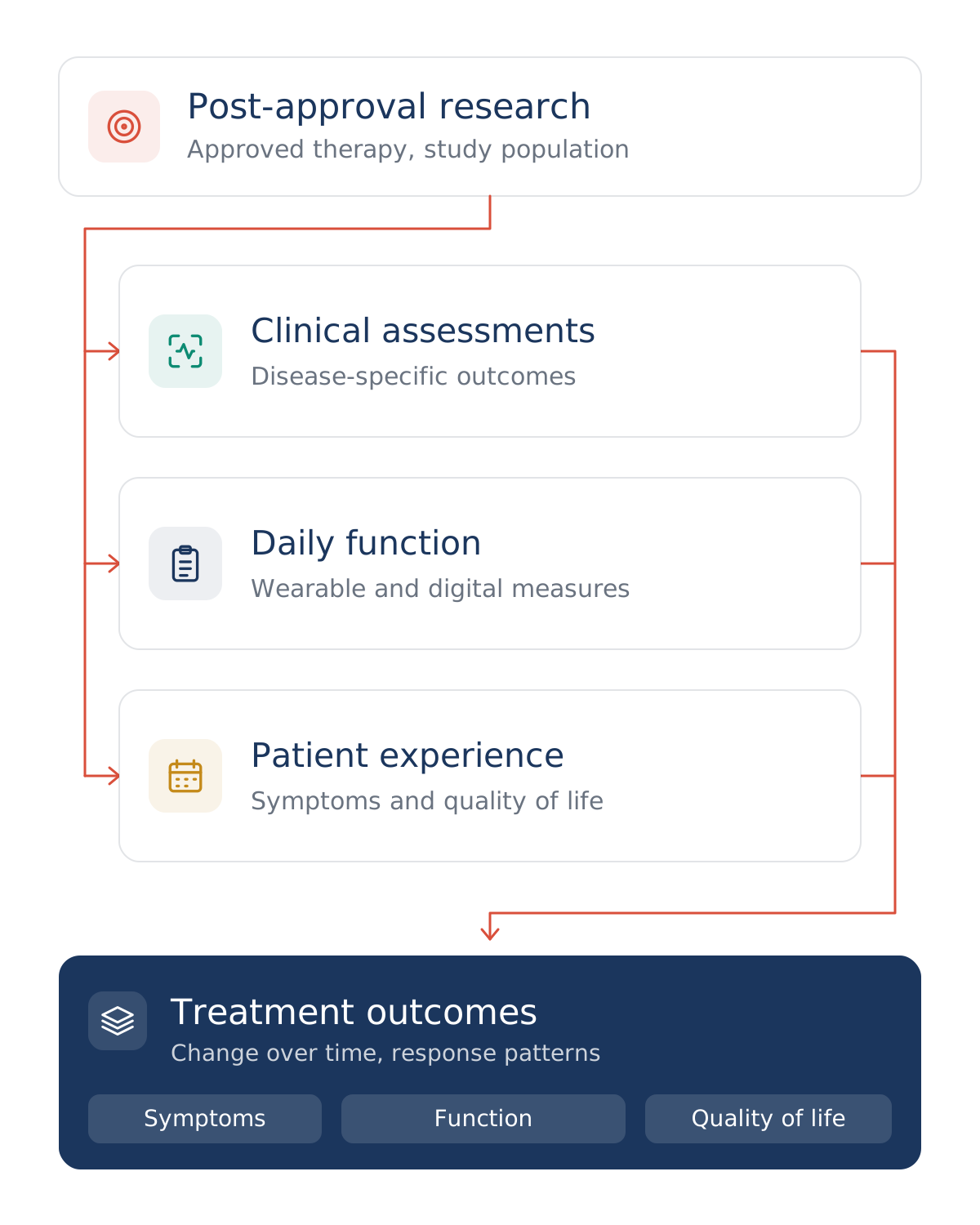
Additional evidence for approved treatments
Support post-approval research, from Phase IV clinical trials to prospective observational studies, with an assessment and analysis strategy tailored to your program's questions.
A research partnership built around your treatment
Drug approval creates new opportunities to understand how treatment outcomes evolve across patients and settings. BioSensics works with sponsors to define meaningful research questions and follow participants over time, bringing together clinic-based assessments and measurements collected during daily life.
What your team receives
Deliverables are agreed with your team and tailored to the protocol and research objectives.
-
Study and assessment plan
A documented approach linking your research objectives to the participant population, measures, follow-up schedule, and planned analyses.
-
Documented study data
Clinical, participant-reported, and digital data within the agreed scope, accompanied by measure definitions and documentation of data quality and completeness.
-
Analyses of treatment outcomes
Results describing observed changes and patterns over time, with relevant comparisons, uncertainty estimates, and exploratory analyses where appropriate.
-
Integrated evidence report
A clear account of the methods, findings, limitations, and implications for the sponsor's evidence plan and future research.
Build a fuller picture of treatment outcomes
Align study design, repeated assessments, and analysis with the additional evidence your team needs about an approved therapy.
-
Study design and assessment strategy
Define the research questions, participant population, assessment schedule, and follow-up period with your team. Select an interventional or observational approach appropriate to the study objectives.
-
Symptoms and clinical outcomes
Use established clinical assessments and participant reports to characterize changes during treatment. Align assessment timing with the treatment schedule and the questions the study is designed to address.
-
Daily function and activity
Complement clinic visits with wearable and digital assessments of relevant aspects of daily life. Depending on the indication, measures may include mobility, activity, upper-limb function, speech, or other assessments.
-
Patient experience and quality of life
Include participant-reported symptoms, function, and quality of life to understand outcomes from the patient's perspective. Combine these reports with clinical and digital observations for a broader view of treatment experience.
-
Patterns of response over time
Examine the timing, magnitude, and variability of observed changes within and across participants. Where the data support it, explore characteristics associated with different outcome patterns to inform further research.
-
Integrated analysis and interpretation
Bring clinical, participant-reported, and digital findings together around the study questions. Interpret results with attention to missing data, variability, potential confounding, and the conclusions supported by the design.
Post-approval research in practice
-
Featured study: BioDigit MG-03
Following outcomes during VYVGART treatment
This prospective observational study is designed to follow people with generalized myasthenia gravis who are starting VYVGART® or VYVGART Hytrulo®. It combines clinical assessments and participant reports with wearable monitoring and digital speech and video assessments.
The research examines changes in symptoms and daily function across treatment cycles and explores whether digital measures can help predict clinical outcomes.
NCT07226830; sponsor BioSensics; collaborator Massachusetts General Hospital
- Planned enrollment
- 25 participants
- Follow-up
- 16 weeks per participant
- Treatment cycles
- 2 cycles observed
- Study design
- Prospective observational, non-interventional
This example describes the registered study design. Findings must be interpreted within its observational framework.
Connect clinical outcomes with daily experience
Select complementary assessments for the indication, participant population, and study objectives. Coordinate their timing with treatment and balance follow-up needs with participant burden.
-
Clinical assessments
Established scales and examinations to characterize symptoms, disease severity, and function at protocol-defined visits.
-
Participant-reported outcomes
Reports of symptoms, daily activities, and quality of life to capture the participant's perspective during treatment.
-
Wearable and digital measures
Repeated measurements in the clinic or at home to describe relevant aspects of function and activity between visits.
-
Selected biological biomarkers
Biological measures, including blood biomarkers where appropriate, can complement the assessment plan when included in the study protocol.
From an evidence question to a post-approval study
Collaborate on the research plan, collect meaningful observations, and interpret the findings in the context of your treatment program.
-
Define the evidence need
Agree on the approved treatment, target population, and questions your team needs to address. Review existing evidence and identify the additional outcomes of interest.
-
Design the study
Select the study approach, assessments, and follow-up schedule. Define responsibilities, data collection procedures, and planned analyses with the sponsor and study partners.
-
Follow participants over time
Collect the agreed clinical, participant-reported, and digital assessments. Review data completeness and quality throughout the study to support consistent follow-up.
-
Analyze and report
Characterize treatment outcomes and relevant patterns in the data. Document findings, uncertainty, and limitations, and identify questions for further research.
Quality and oversight for clinical research
Study planning addresses technology suitability, software validation, participant protections, and data governance for the intended research use.
-
Device status and intended use
PAMSys and LEGSys are FDA-listed devices. Device selection considers the intended use, study population, and applicable requirements in each participating country.
-
Study-specific software validation
BioDigit platforms are configured for the protocol, with validation activities focused on the software, workflows, and data requirements used in the study.
-
Ethics review and consent
Prospective studies follow applicable IRB or ethics committee approvals and consent requirements. Registration, data reuse, and biospecimen handling are addressed in the study plan.
-
Electronic records and signatures
Electronic-record controls are reviewed against applicable 21 CFR Part 11 and EU Annex 11 requirements for the configured system and study workflow.
-
Data privacy and security
Data collection, access, storage, and sharing are planned around applicable privacy requirements, including HIPAA and GDPR where relevant.
-
Audit trails and authorized access
Role-based permissions and audit trails support traceability and controlled access to study data.
Technology that supports repeated assessments
Configure wearable, clinic-based, and remote assessment tools around the study protocol and participant needs.
-
At-home wearables
At-Home Wearables
Wearable sensors for recording mobility, activity, and movement measures during daily life.
-
On-site assessments
BioDigit Clinic
A configurable platform for motor, speech, cognitive, and video assessments during study visits.
-
At-home assessments
BioDigit Home
Remote collection of wearable data, digital assessments, and participant-reported outcomes between study visits.
-
Smartwatch data
BioDigit Watch
Smartwatch-based collection of physiological and movement data, with sensor selection and recording schedules configured for the protocol.
Planning your post-approval study
Key questions about study types, digital assessments, and the interpretation of treatment outcomes.
What is post-approval evidence generation?
It is research that collects additional evidence about an approved treatment. Studies may examine clinical outcomes, daily function, quality of life, and patterns of response in populations and settings relevant to the sponsor's program.
Does this include Phase IV clinical trials?
Post-approval research can include Phase IV interventional trials and observational studies of approved treatments. BioSensics works with sponsors to define the research questions, assessment strategy, and scope of support. The study design determines which questions the findings can answer.
How do digital assessments contribute?
Wearable and digital assessments can add repeated observations between clinic visits and describe relevant aspects of daily function. They complement clinical assessments and participant reports, with measures selected for the indication, population, and study objectives.
Can an observational study establish treatment efficacy?
An observational study can describe outcomes during treatment and examine associations. Because treatment is not assigned by the study, attributing changes to the drug requires careful consideration of potential confounding and other explanations. The analysis and interpretation are aligned with the study design.
How does this differ from Endpoint Development?
Endpoint Development focuses on identifying and developing measures for an indication, including natural history research and targeted BioDigit Database analyses. Post-Approval Evidence Generation focuses on collecting additional evidence about approved treatments using an assessment strategy tailored to the study. Findings may also identify questions for further endpoint research.
Connect your research with the right support
Coordinate endpoint development, regulatory support, study operations, analysis, and post-approval research around your program's objectives.
-
Endpoint Development
Develop candidate endpoints through natural history studies and focused BioDigit Database analyses for the indication of interest.
-
Regulatory Support
Organize scientific and technical evidence to support sponsor discussions about the intended use of digital measures and endpoints.
-
Clinical Trial Operations
Configure and deploy digital assessments, support data collection, and deliver study data within the agreed operating plan.
-
Data Analysis and Scientific Reporting
Turn study data into documented analyses, clear findings, and scientific reports for your program.
Plan the next study for your approved treatment
Tell us about your approved therapy, indication, and evidence needs. BioSensics can then work with you to define a study that adds meaningful information about treatment outcomes.